Buyer’s guide · Upland
Best upland and pheasant gear for a Wisconsin walking hunt
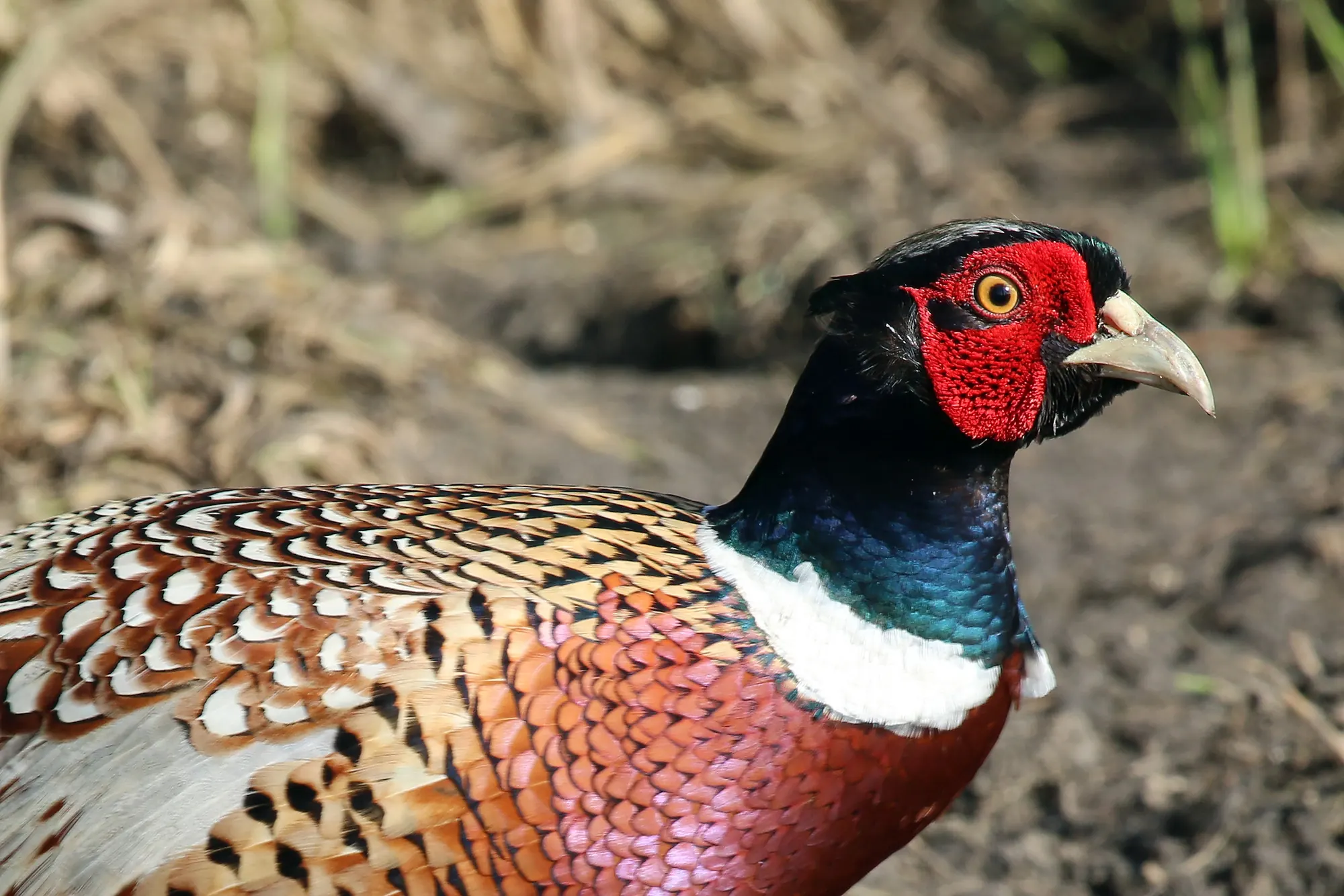
Photo: Charles J. Sharp (CC BY-SA 4.0).
In this guide
Affiliate disclosure. Some accessory links on this page go to Amazon and may earn a commission at no extra cost to you if you buy something. I am not paid to place any product in these guides. Full disclosure.
Upland hunting in Wisconsin is a walking sport. Pheasants live in grass, cattails, and edges. Ruffed grouse live in young timber and alder edges. In both cases you cover ground, you cross wet spots, and during a firearm deer season you also have a clothing rule that is not optional. The gear that fails first is usually boots, then a vest that cannot carry a limit of birds and a box of shells without slapping your ribs.
This is a research-based kit guide, not a wear-test of a full clothing line. Official product facts come from pages I opened on November 24, 2026, including Filson’s Tin Cloth Game Bag and the boot specifications already documented in the Midwest hunting boot guide. I have not published a season-long test of the current Tin Cloth Game Bag here. Filson’s page showed a 25 percent discount that day but did not give me a clear dollar price in the content I could capture, so I am describing the vest without inventing a number.
Search the Filson Tin Cloth Game Bag on Amazon, compare prices at Sportsman’s Warehouse or Cabela’s, and see the boot guide for the LaCrosse and Danner options.
The legal layer: highly visible clothing
When a firearm deer season is in progress in Wisconsin, it is illegal to hunt any game, except waterfowl, unless at least 50 percent of the hunter’s outer clothing above the waist is blaze orange or fluorescent pink. A hat or other head covering, if worn, must be at least 50 percent blaze orange or fluorescent pink. The DNR says faded or stained color may not meet the requirement, and that camo-blaze is legal if 50 percent or more of the material is blaze orange or pink. The department recommends 100 percent solid blaze orange or pink. The requirement does not apply to legal night hunting, such as raccoon, from 30 minutes after sunset to 30 minutes before sunrise.
That rule catches a lot of upland hunters who walk CRP in a brown vest during the November firearm deer season. If deer gun season is open, your upland vest and hat have to meet the standard, even if you are only after pheasants. I would rather wear a blaze vest or a blaze coat over a game bag than argue about percentages on a field edge. Confirm opening and closing dates on the current DNR regulations. This article is not a season calendar.
The walking layer: boots you can document
I am not going to invent a new boot comparison here. The two models I have already documented from official pages are the LaCrosse Alphaburly Pro 18-inch 1600G and the Danner Pronghorn 400G. For upland, the official use case points at the lighter leather boot. The Pronghorn is an 8-inch lace-up with a GORE-TEX liner, 400G PrimaLoft, and an official weight of 58 ounces per pair. The Alphaburly Pro is a tall, 5.5-pound rubber boot built for wet, cold, stand-still hunts. You can walk a slough in rubber. You will feel those 5.5 pounds by the third field.
If your upland days are mostly dry grass and timber, start with a walking boot in the Pronghorn’s category. If you spend the morning in a cattail slough and the afternoon on a ridge, you may still want rubber in the truck. Details, official prices, and source links are in the boot guide. Size them with the sock you will walk in, and do not break them in on opening morning.
The carrying layer: Filson Tin Cloth Game Bag
Filson’s official Tin Cloth Game Bag page describes a water-repellent, abrasion-resistant tin-cloth (cotton) hunting vest the company calls a traditional favorite since 1989. Official features include a rear-loading game bag, adjustable cotton-webbing shoulder straps, a bridle-leather waist closure, and two expandable shell pockets that each carry a box of shells. Filson says it is cut for ease of movement and breathability, and that it works over a T-shirt early or over layers late. The size chart lists Regular at a 37-inch chest and Super at a 43-inch chest, as body measurements. Care is to wipe or brush it clean. It is imported, and Filson lists a limited lifetime guarantee.
I could see that the official page was advertising 25 percent off on November 24, 2026, but I could not capture a reliable dollar price from that page, so I am not quoting one. Check the live listing.
This is the vest I would shop if I wanted a simple, documented game bag with real shell pockets and a rear bag, and I was willing to add a blaze layer when firearm deer season is in. Tin cloth is waxed, water-repellent canvas, not a rain jacket. It will take brush and a wet bird. It will not replace a hard rain shell. If your chest measurement sits between 37 and 43 inches, read Filson’s chart carefully instead of guessing. A vest that rides up when you mount a shotgun is the wrong vest, no matter how long the company has made it.
Because the vest itself is dark tan on the official page, it is not, by itself, a substitute for the 50 percent blaze-orange or pink requirement when firearm deer season is open. Plan a blaze coat, vest, or hat that meets the DNR standard, then wear the game bag with it or over it as the fit allows.
The rest of a honest upland kit
A walking hunt also needs water, a small first-aid kit, and a headlamp if you might finish a retrieve after legal shooting hours — used as a walking light, not as a scanning light, per the shining rules in the headlamp guide. A compact knife or the JaegerPair field-dressing set will handle a bird. I like a blaze hat even when I also wear a blaze vest, because the DNR calls out head coverings separately if you wear one.
Chaps or brush pants help in raspberry and tag alder. I did not document a current official chap or pant price I am willing to print today, so I will not invent one. Shop a current manufacturer page, look for reinforced face fabric, and make sure you can still mount a gun.
Dogs change the kit — water for the dog, a first-aid item for pads, and more patience at road crossings — but they do not change the clothing rule. Your blaze is for other hunters, not for the pheasant.
Season dates, shooting hours, and species rules belong on the DNR site. Ruffed grouse, pheasant, and woodcock calendars are not something I will abbreviate from memory in a gear article.
How I’d choose
- Firearm deer season is open: meet the 50 percent blaze-orange or pink rule first, then add a game bag or pockets you can hunt in.
- I want a documented, simple upland vest: Tin Cloth Game Bag, at the live official price, in the size that matches Filson’s chest chart, plus a blaze layer as needed.
- I walk a lot of mixed wet and dry ground: a walking boot from the boot guide, with rubber in reserve, beats one heroic pair that does neither job well.
- I also sit deer in the same week: do not wear an upland vest into a timber sit and call it concealment. Different hunts, different layers.
Upland gear should disappear once you start walking. If a vest slaps, a boot rubs, or a pocket will not hold a box of shells closed, fix it at home. The birds will not wait while you empty a spilled pocket in the grass.
Sources
- Filson Tin Cloth Game Bag: https://www.filson.com/products/tin-cloth-game-bag-dark-tan
- Wisconsin DNR, highly visible clothing: https://dnr.wisconsin.gov/topic/Hunt/regulations/OnlineHuntingRegulations/HighlyVisibleClothing
- LaCrosse and Danner official boot pages, as cited in the Midwest hunting boot guide: /guides/best-midwest-hunting-boots